6 Questions to Ask in Your First Conversation With a College Coach
Your first conversation with a college coach can feel like an interview. It isn't. It's a two-way conversation, and the athletes who prepare best come with questions, not only answers.
Coaches are working out whether you fit their program. You're working out whether the program fits you. These six questions help you do that. They work for any sport and any level, whether you're talking to an NCAA, NAIA or NJCAA coach. They also work if you're talking to the coach of a club team, which is common in sports such as Bowling, Hockey and Rugby.
Pick the ones that matter most to you, write them down and keep them in front of you during the call. It is important to note that these questions do not follow any particular order.
Preparing for the conversation is just as important as the questions themselves. We'll cover how to prepare in another edition of the blog.
1. What do you see in my athletic abilities, and where would I fit?
This question matters a lot: how does this coach see you?
A coach's answer shows whether they have actually watched you compete or only skimmed your profile. Listen for specifics. The strengths they name, the areas they'd want you to improve and the role they picture for you are all good signs.
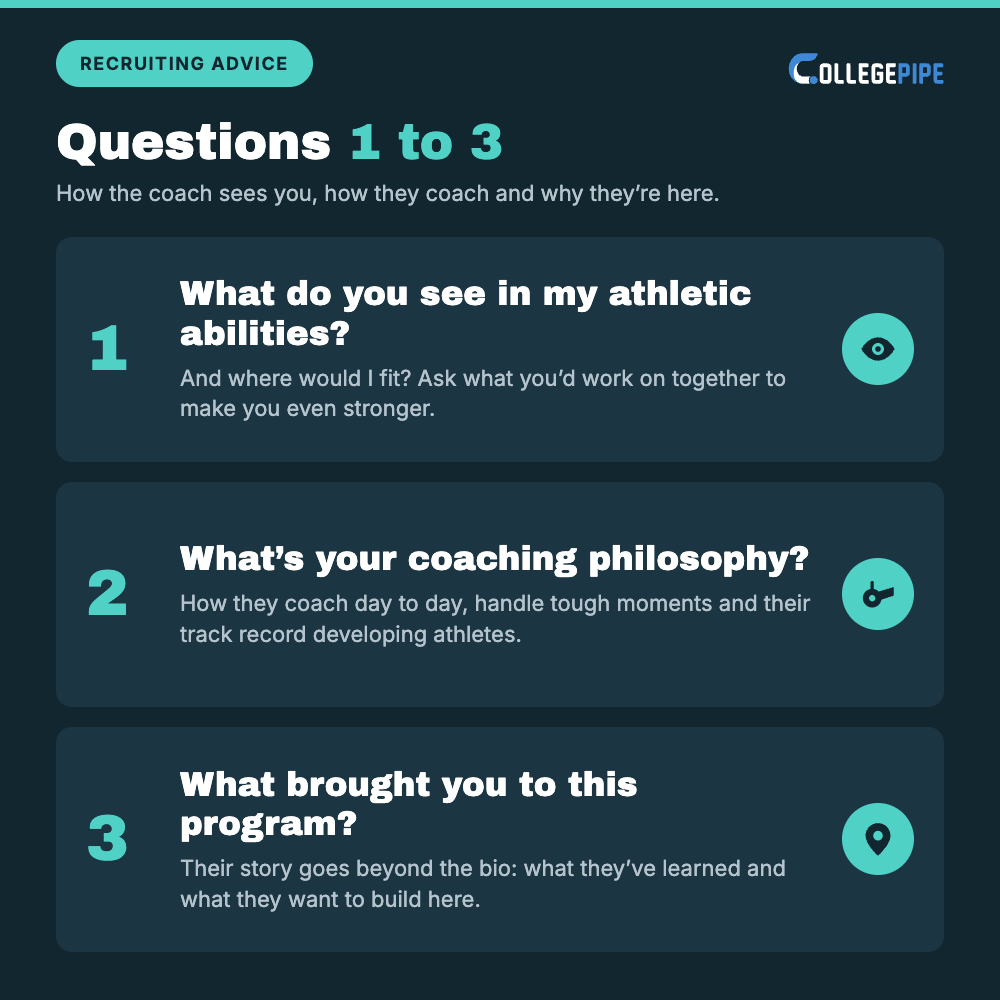
Then follow up: What would you work on with me to make me an even stronger athlete? A coach with a clear plan for your development is thinking about you as a person, not just a spot on the roster.
Also ask where you'd fit on the team over the next few years, and who else the program is recruiting in your position or event. That gives you a realistic picture of what's ahead.
It has happened that coaches recruited several players for the same position, without telling the players about it in the recruitment process.
2. What's your coaching philosophy?
Every coach leads differently. Some are demanding and structured, almost military-style. Others are more hands-off and expect you to take ownership. Neither is wrong, but one will naturally suit you better than the other. Often, your past experiences with coaches in high school or club sports are a good guide. Which coaches helped you develop best? What did you take away from each of them?
Ask how they coach day to day, how they handle tough moments like a bad result or a slump, and what their track record is in developing athletes. The way a coach answers tells you what being coached by them would really feel like.
If you can (down the road), compare their answer with what current athletes on the team say. When the two match, that's a good sign.
3. What brought you to this program?
Anyone can read a coach's bio. The story behind it is harder to find, and it tells you a lot. Ask what drew them to this program, what they've learned at earlier stops and what they want to build here.
Programs change over time, and where a program is headed shapes your experience as much as where it is today. Ask what the coach is working toward and how they see your role in it.
It's also an easy way to keep the conversation going, and it shows you're interested in the program, not just in being recruited.
Coaching changes happen, and some programs go through several head coaches in just a few seasons. Some athletes might not mind, but many would see it as a red flag.
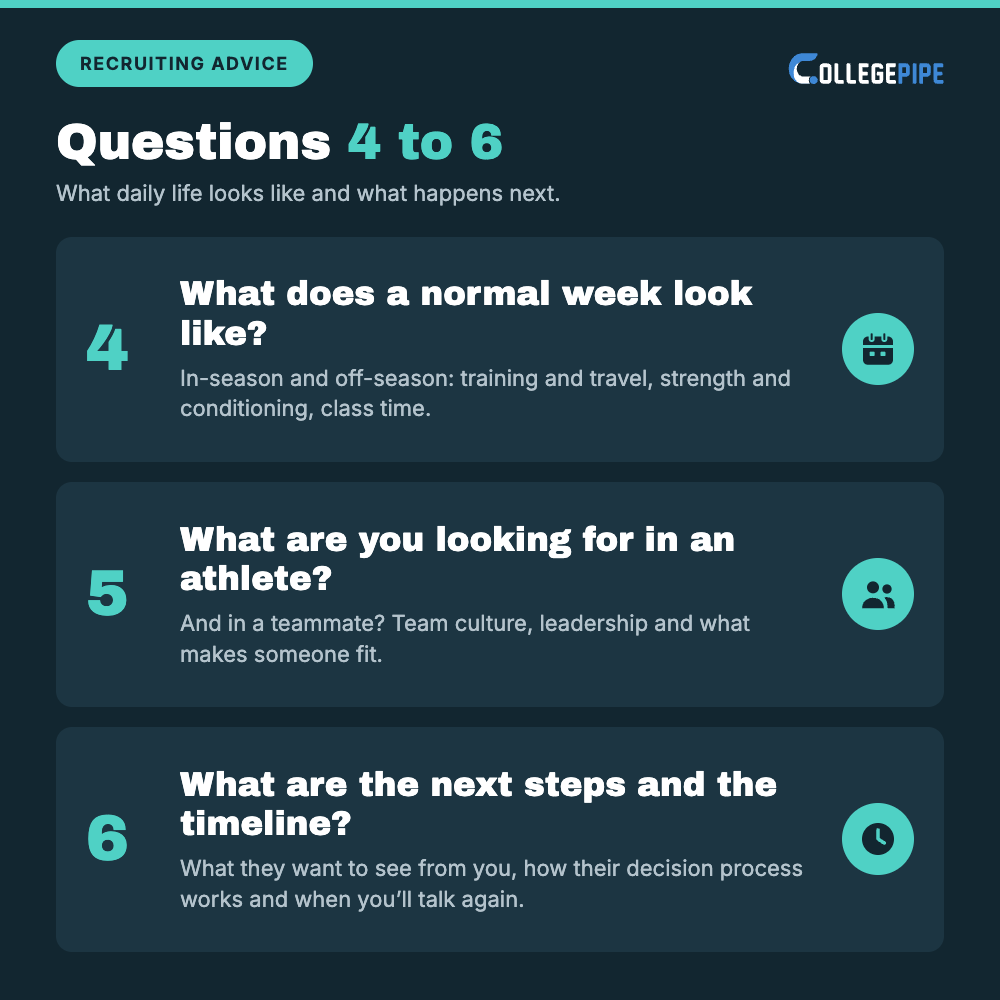
4. What does a normal week look like?
College sports are a big time commitment, and the schedule can look very different from what you're used to. Ask the coach to walk you through a typical week, both in season and in the off-season. The NCAA's latest study on student-athlete time commitments shows how much the weekly schedule differs by division and sport.
Cover the basics: how often the team trains, how much travel to expect, how much strength and conditioning work is involved and how practice fits around classes. Ask what happens when competition or travel clashes with a class or an exam.
This question also helps you picture your own life there. If the week sounds exciting, great. If it sounds like more than you want, it's better to know now. It may be a sign to look at other programs.
5. What are you looking for in an athlete and teammate?
Skills get you noticed. Character and fit often decide the rest. Coaches build teams, not just rosters, and most have a clear idea of the kind of person who thrives in their program.
Ask what qualities they value most, how they describe the team culture and what leadership looks like to them. Listen for words like work ethic, attitude and coachability. They tell you what the coach will expect from you every day.
Then ask yourself honestly: does that sound like you, and is it a group you'd want to be part of? If not, it might be hard to accept right in that moment, but you will be doing yourself a big favor going forward.
6. What are the next steps and the timeline?
End the call by finding out what happens next. Otherwise you may hang up unsure where you stand.
Ask what the coach would like to see from you before you talk again, such as updated video, results, grades or a visit. Ask how their decision process works, including when they expect to finalize their recruiting class, and when they'd like to connect next.
The answers help you plan. You'll know what to send, when to follow up and how much time you have to compare your options.
If you're uncomfortable asking during the call, or you forgot, no worries. You can always follow up right away or a few days later.
After the call: follow up
Write down what you learned while it's fresh (yes, you can do that on College Pipe), then send a short thank-you message within a day or two. In it, mention one takeaway from the conversation, answer anything the coach asked for and confirm the next step you agreed on.
Not sure how to word it? Our guide on writing follow-up emails walks you through it, and How To Contact College Coaches covers the basics of reaching out in the first place.
Still figuring out when to start talking to coaches at all? Read When Should You Start the Recruiting Process?
Make the first call count
You don't need all six questions in one call. Pick the ones that matter most to you and let the conversation flow. What counts is that you show up curious and leave knowing more about the coach, the program and your next step.
In an ideal world, the first call is only the starting point of building a relationship with a coach. That is the hardest part, and we'll cover it in a different edition of the blog.
Good questions are easier to ask when you know which coaches to talk to. With a free College Pipe account, you can build your recruiting profile, find programs that fit and get in touch with coaches.


