NCAA Signing Day 2026: What Athletes Need to Know
What Signing Day is, and what changed
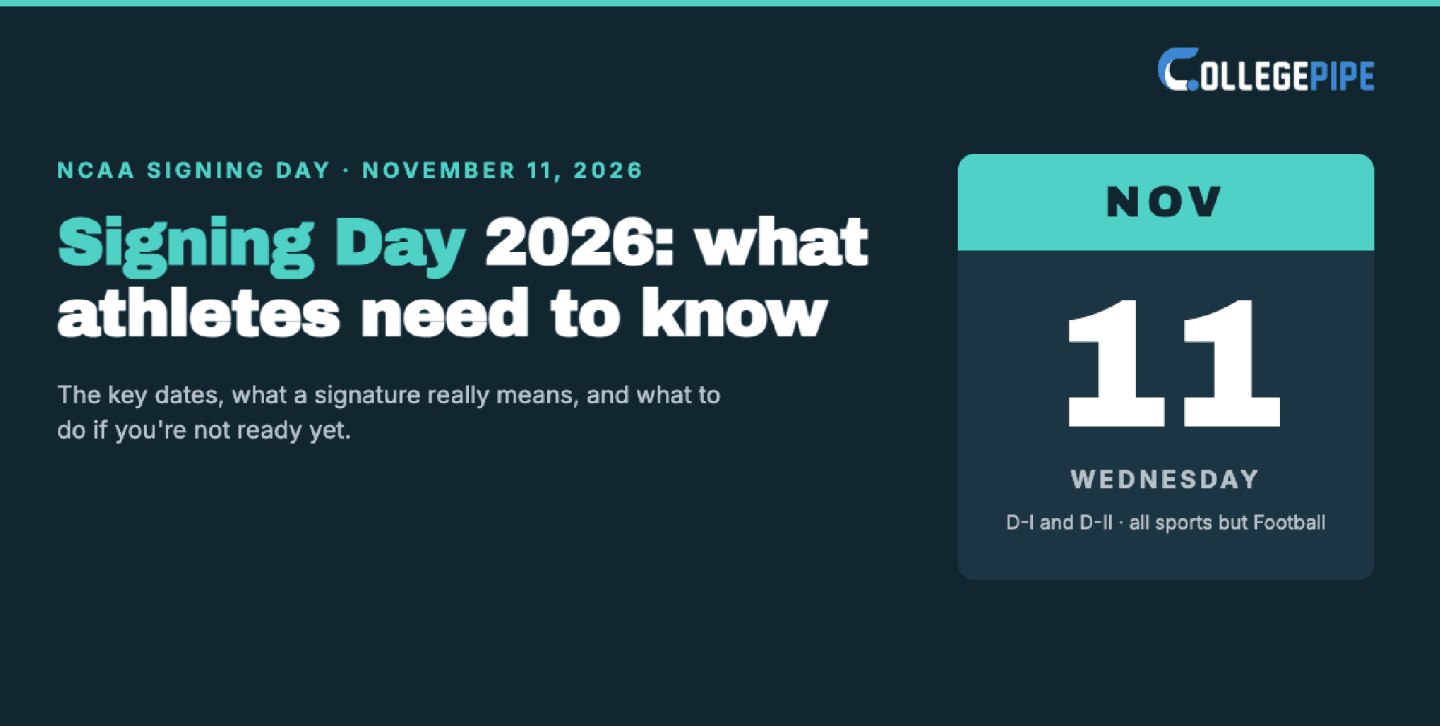
Signing Day is the date from which a recruit can officially commit to a college team by signing a written offer. In 2026, that date is Wednesday, November 11, for every NCAA Division I and Division II sport except football.
Until recently, recruits signed a National Letter of Intent (NLI). The NCAA removed the NLI in October 2024, and signing now works through an athletics aid agreement between the athlete and the school. The name is different, but the moment still matters: this is when a verbal promise turns into a signed document.
If you are a Class of 2027 athlete (heading to college in Fall 2027), this is the first date on your calendar. If you are younger, it is a preview of the timeline you will follow next year. Not sure where you are in the process? Our guide on when to start the recruiting process breaks it down year by year.
Key signing dates for 2026–27
The NCAA sets different windows by sport. These are the dates reported for athletes enrolling in 2027–28:
Sport and division | Signing opens | Signing window |
|---|---|---|
Division I Men's and Women's Basketball (early period) | Nov 11, 2026 | Nov 11–18, 2026 |
Division I Men's and Women's Basketball (regular period) | Apr 14, 2027 | Set by each school |
Division I Football (early period) | Dec 2, 2026 | Dec 2–4, 2026 |
Division I and II Football (regular period) | Feb 3, 2027 | Set by each school |
Division I and II Football (mid-year junior college transfers) | Dec 2, 2026 | Set by each school |
All other Division I and II sports | Nov 11, 2026 | No NCAA closing date |
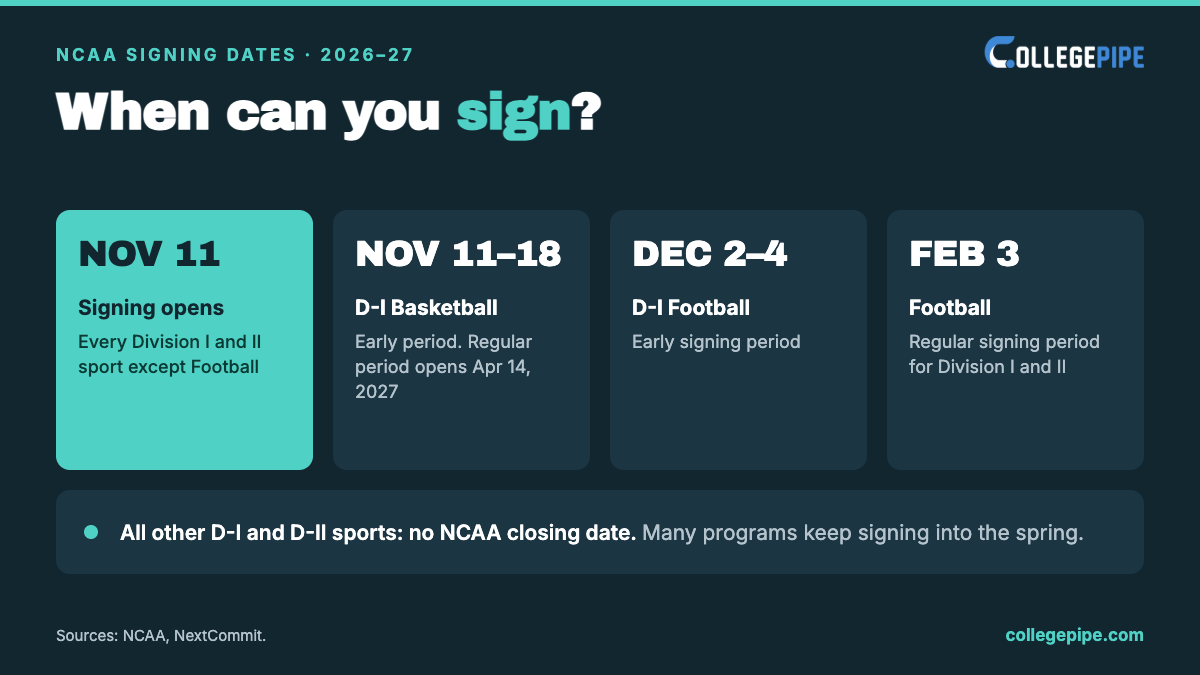
The key point for most athletes: outside of basketball and football, there is no NCAA deadline to sign. A sport like Soccer, Baseball or Track and Field opens on November 11 and stays open, so many programs keep signing athletes well into the spring.
One caution: the NCAA's own signing-date file still showed last year's dates in October, according to one source we checked. Always confirm your sport's dates with the NCAA Eligibility Center and with the coach recruiting you.
Verbal commitment vs. signed agreement
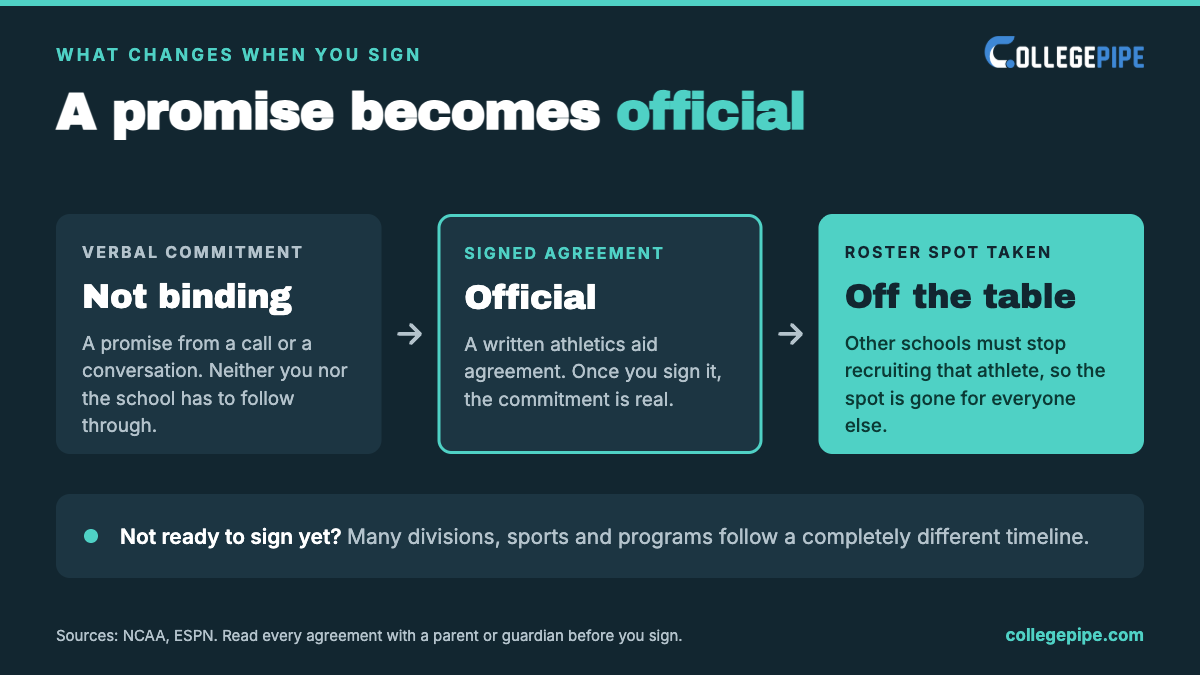
A verbal commitment is a promise made in a call or a conversation. It is not binding for either side. An athlete can verbally commit and still sign somewhere else, and a school can still change its plans.
A signed athletics aid agreement is different. It is a written document, signed by the athlete, and it is official.
Verbal commitment | Signed athletics aid agreement | |
|---|---|---|
Binding | No, for you or the school | Yes, once signed in the correct window |
Format | A conversation | A written, signed document |
Other schools | May still recruit you | Must stop recruiting you |
Typical use | Early in the process | From Signing Day onward |
This is why Signing Day changes the picture. When an athlete signs, the roster spot is taken, and other programs are no longer allowed to keep recruiting that athlete.
What signing means for you
Before you sign, read the agreement line by line, ideally with a parent or guardian. These are the points reported most often about the new aid agreements:
It covers one academic year. It is a financial commitment from the school, not a promise of playing time.
It stays in force if the coach leaves. The agreement is with the school, not with the person who recruited you.
Timing matters. You have to sign inside your sport's signing window, and the agreement comes with its own sign-by date, so check it as soon as you receive it.
It can be voided. For example, if you are later ruled a non-qualifier by the NCAA Eligibility Center.
One sport only. You cannot sign agreements for two sports.
Changing your mind has a cost. The old letter-of-intent penalty is gone, and law firm Husch Blackwell notes the new rules add no eligibility repercussions. But once you sign, other schools must stop recruiting you, and a release only lifts that ban. Ask the school what happens if your plans change.
No academic aid included. A common question we receive is the "missing portion of scholarship money". If your offer consists of athletics aid and academic aid, the grant-in-aid from the athletics department will only cover the amount you receive from athletics.
Academic aid is separate. Athletes often ask us where the "missing" part of their scholarship went. If your package combines athletics and academic aid, the athletics agreement only covers the athletics portion. Academic or merit awards come from the school's financial aid office, so ask for the full package in writing.
If anything in the document is unclear, ask the coach or compliance office before you sign. A signature is easy to give and hard to take back.
Not ready to sign yet? That's okay
Many athletes reach November 11 without a signed agreement, and that is normal. Many divisions, sports and programs follow a completely different timeline.
Most Division I and II sports have no NCAA closing date. Coaches fill their rosters as scholarship money, transfers and visits fall into place, often through the spring.
Division III schools do not offer athletic scholarships. NCAA signing dates for athletics aid do not apply there, so these athletes follow the admissions timeline instead.
The NAIA and junior colleges (NJCAA) have their own commitment agreements. Their dates and rules are set separately from the NCAA's.
Transfers are different. NCAA signing dates do not apply to four-year transfers, who have to be in the NCAA Transfer Portal first.
Thinking about the NAIA? Read what the fifth season of competition changes for athletes, and which schools are joining in 2027–2028.
Athletes who stay calm are the ones who keep working. Until a roster spot is signed, it is still open, so what matters now is that your profile is complete, your video is current and coaches know you are interested.
What to do now
If you are aiming for Fall 2027
It is not too late to start. Rosters for Fall 2027 are still being built, and coaches in most sports keep recruiting long after November 11.
Finish your recruiting profile, with your stats, academics and a current highlight video.
Register with the NCAA Eligibility Center if you plan to play Division I or II.
Build a list of programs that fit your level, and get on the radar of college coaches.
Ask each coach where they are in their recruiting and when they expect to make offers.
If you receive a written offer, read it with a parent or guardian and ask your questions before you sign.
If you are aiming for 2028 or later
This year's calendar is a preview of yours. Learn the dates for your sport now, so that next November you know what to expect. Start early with your profile, your grades and your video, and begin conversations with coaches before the signing windows open. Our year-by-year recruiting timeline shows what to do and when.
You can build your recruiting profile on College Pipe and find programs that match your sport and level at collegepipe.com.
Keep reading
When Should You Start the Recruiting Process?: what to do in each year before college
NCAA Shake-Up: How New Rules and Roster Caps Are Changing the Recruiting Game: why rosters and offers look different now
3 Reasons College Program Changes Can be Your Ticket to a Scholarship: how a program change can open a spot for you


